
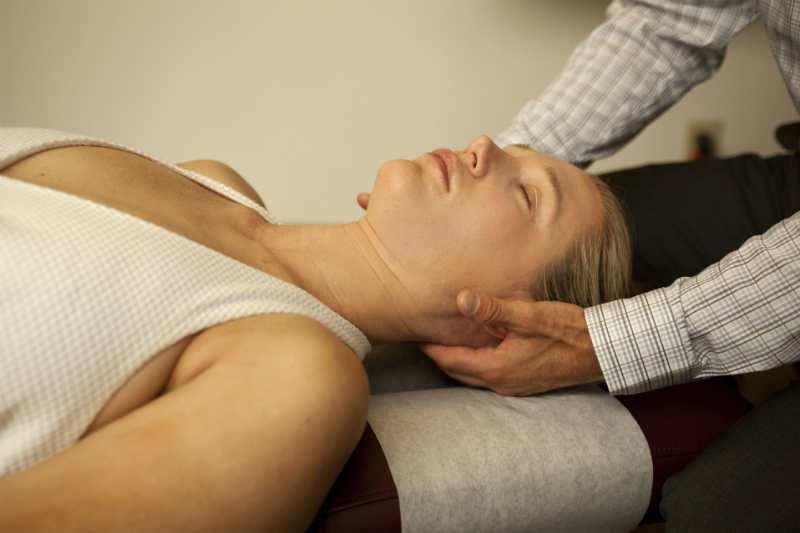
A neck that turns farther to one side often reflects differences in joint movement, muscle tension, posture, or a previous strain. The imbalance may be temporary, but an evaluation is appropriate when restricted rotation persists, causes pain, or appears with numbness, weakness, headaches, or symptoms following an injury.
Uneven neck movement is common because everyday activities rarely use both sides of the body equally. Driving, computer work, carrying a child, sleeping in one position, and repeatedly looking in the same direction can influence how the neck moves.
The amount of rotation alone does not identify the cause. The timing, location, and type of symptoms provide important context.
Does Neck Rotation Need to Be Equal?
The neck is designed to rotate in both directions, but the range does not need to be perfectly identical. Small differences may develop because of hand dominance, work habits, sports, previous injuries, and natural variations in joint structure.
A more noticeable difference deserves attention when one direction feels blocked, painful, unstable, or increasingly limited. It is also helpful to observe whether the restriction remains throughout the day or appears mainly after driving, working, exercising, or sleeping.
Rather than comparing neck movement with someone else’s range, compare it with your usual movement. A recent change may be more meaningful than a mild difference that has existed for years without discomfort.
What Can Cause Uneven Neck Movement?
Several structures work together whenever the head turns. The joints between the neck vertebrae guide movement, while surrounding muscles control and stabilize it. The upper back and shoulders also contribute to comfortable neck rotation.
Possible reasons for uneven movement include:
-
Muscle tension or guarding on one side
-
Restricted movement in a neck or upper-back joint
-
Repetitive driving or workplace positions
-
A sleep position that keeps the head turned
-
Previous whiplash, sports strain, or a fall
-
Shoulder stiffness that affects upper-body movement
These issues can feel similar. Both muscle guarding and joint restriction may make the head feel as though it reaches a firm stopping point. A physical examination can help clarify which areas may be contributing.
Why Can One Side Feel Tight While the Other Side Hurts?
The side that feels tight is not always the side responsible for the main movement problem. When one area does not move comfortably, nearby joints and muscles may work harder to compensate.
This can produce tightness on one side and soreness on the other. Discomfort may also appear at the base of the skull, beside the spine, across the shoulder, or between the shoulder blades.
For this reason, a neck evaluation should consider more than the location of pain. Posture, upper-back motion, shoulder position, muscle tone, and neurological signs can all provide useful information.
When Is Uneven Neck Rotation More Concerning?
Restricted movement should be evaluated promptly when it begins after a vehicle collision, fall, direct blow, or sports injury. The same applies when symptoms become progressively worse instead of improving with reasonable activity changes.
Medical attention may be needed when restricted rotation occurs with:
-
Arm or hand weakness
-
Increasing numbness or tingling
-
Loss of coordination
-
Severe or unusual headaches
-
Dizziness or fainting
-
Fever or difficulty walking
These symptoms should not be dismissed as ordinary muscle tightness.
For mild stiffness without warning signs, avoid forcing the head beyond its comfortable range. Repeatedly twisting the neck to produce a popping sound may irritate sensitive tissues and does not reveal why movement is uneven.
How Does a Chiropractor Evaluate Neck Rotation?
A chiropractor may begin by asking when the limitation started, which direction is restricted, and what activities affect it. They may also review previous injuries, work habits, sleep positions, headaches, shoulder discomfort, and any tingling or numbness.
The physical examination may compare rotation, side bending, and the ability to look up or down. It may also assess posture, muscle tension, joint movement, strength, reflexes, and sensation.
When a neck pain chiropractor determines that chiropractic care is appropriate, the plan should be based on the examination rather than the goal of creating a cracking sound. Imaging or a medical referral may be considered when the history or examination suggests that further evaluation is necessary.
Is a Neck Adjustment Always Necessary?
A neck adjustment is one possible form of care, but it is not automatically needed for every movement difference. Depending on the findings, another approach may be more appropriate.
Care may include gentle joint mobilization, soft-tissue methods, guided exercises, posture changes, or temporary activity modifications. When an adjustment is appropriate, the chiropractor should select a controlled technique based on the person’s health history, comfort, and examination results.
The purpose of care is to address identified movement restrictions, not to make both sides produce the same sound. Progress may be measured through easier head turning, less muscle guarding, greater comfort while driving, and improved tolerance for normal activities.
What Should Families in Clovis Look For?
People searching for a family chiropractor near them should consider how the provider evaluates each person rather than expecting one standard technique.
A child, active adult, older adult, and someone recovering from an accident should not receive an identical assessment simply because they all report neck stiffness. Age, medical history, activity level, symptoms, and examination findings should guide care.
Helpful questions include how the chiropractor screens for warning signs, what techniques are available, and how they determine when referral to another healthcare provider is appropriate.
When Should You Schedule an Evaluation?
Consider an evaluation when uneven neck rotation lasts more than a few days, repeatedly returns, interferes with driving or work, or occurs with pain, weakness, or numbness. An assessment can help determine whether the limitation may involve muscles, joints, posture, or an injury requiring additional care.
For persistent neck stiffness or reduced rotation in Clovis, CA, contact a licensed chiropractor to discuss the symptoms and arrange an appropriate evaluation.