
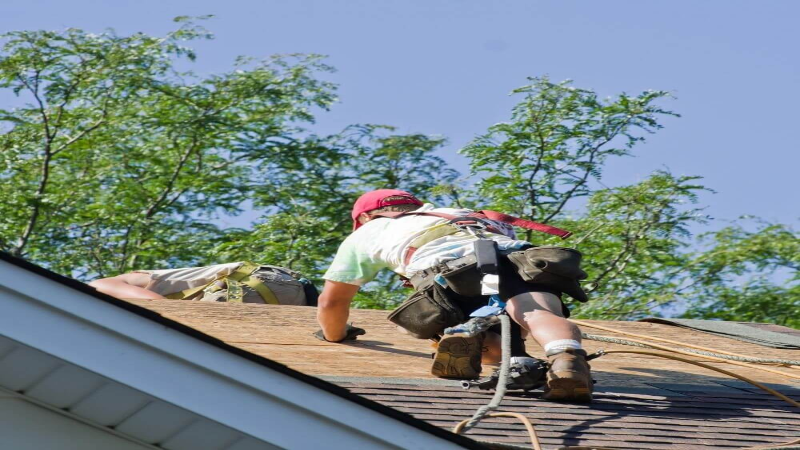
Tile batten spacing determines where individual rows of roof tile rest and how consistently those rows are positioned across a roof slope. During tile installation in Mesa, AZ, installers calculate and mark the batten layout before placing the tiles so the finished courses remain properly aligned from the eave to the upper sections of the roof.
What Are Battens in a Tile Roof System?
Battens are horizontal strips installed across the roof slope beneath certain types of tile. They provide a consistent surface where tiles can rest or attach while helping establish the position of each course.
Battens are only one part of a complete tile assembly. The deck, underlayment, flashing, penetrations, edge details, battens, and tile must work together.
The specific configuration depends on the tile product and installation requirements. For that reason, spacing should be determined using the selected material rather than applying a single measurement to every tile project.
Why Is Batten Spacing Determined Before Tile Placement?
Installers need to know how the tile courses will fit across the entire roof plane before permanent placement begins.
If spacing is established one row at a time without considering the total distance, small measurement differences can accumulate. The upper courses may then require awkward adjustments or inconsistent tile exposure.
Planning the complete layout first allows installers to distribute the courses more evenly. It also helps maintain consistent lines across visible roof sections.
Property owners considering roof installation services can ask how the tile layout, underlayment, battens, and final placement will be coordinated before installation begins.
How Is the Correct Batten Spacing Calculated?
The layout begins by identifying the usable length of the roof slope and the required positioning of the selected tile.
Installers consider several factors, including:
- Tile dimensions
- Required headlap or overlap
- Manufacturer installation instructions
- Eave positioning
- Upper termination details
- Roof slope dimensions
- Changes in roof geometry
Measurements are then used to determine how many courses will fit between the lower and upper portions of the roof.
Rather than assuming every course will automatically fit, installers can adjust the planned exposure within allowable specifications so the rows remain consistent.
Why Does the First Batten Matter?
The first batten establishes the position of the lowest tile course and influences the layout of every course above it.
Its location must coordinate with the eave detail so the first row sits correctly and directs runoff toward the intended edge. If the starting position is incorrect, the error can affect the remaining batten layout.
The first row may also require different support than the courses above because the lower edge of the tile does not rest on another tile.
Careful measurements at this stage reduce the likelihood of needing significant adjustments farther up the slope.
How Are Batten Lines Kept Straight?
Once spacing has been calculated, installers mark reference points across the roof plane. Straight layout lines help guide the placement of battens from one side of the section to the other.
These references are important on larger roof areas because small deviations can become more noticeable as additional tile courses are installed.
Roof features such as valleys, hips, walls, vents, and other penetrations can interrupt otherwise continuous rows. The layout must account for these features while maintaining consistent course positioning across adjacent sections.
What Problems Can Incorrect Batten Spacing Cause?
Incorrect spacing may create visible and functional installation problems.
Tiles may sit too close together or too far apart. Courses can appear uneven, and the required overlap between rows may become inconsistent.
Poor layout can also create difficulties near the upper termination of a roof plane. Installers may be left with an unusually narrow or wide final course if measurements were not distributed correctly from the beginning.
These conditions do not automatically indicate that roof repair services are needed. Roof inspection services can evaluate whether a visible irregularity is cosmetic or whether it affects the way the tile system was assembled.
Can Batten Conditions Change Over Time?
Battens remain beneath the tile after installation and are generally protected from direct exposure. However, moisture intrusion or movement within the surrounding assembly may affect hidden components.
When tile is removed during roof maintenance and repairs, accessible battens can be evaluated along with the underlayment and other supporting materials.
Not every older batten needs replacement. Its condition, attachment, and compatibility with the planned work should determine whether it remains suitable.
What Should Homeowners Ask Before Tile Installation?
Homeowners do not need to calculate batten spacing themselves, but they can ask how the installer determines course layout and follows the requirements for the selected tile.
Useful questions include how measurements are established, how roof transitions are handled, and how installation quality is checked before the project is completed.
Plan Tile Layout Before Placement Begins
Accurate batten spacing starts with measurements and planning rather than adjustments made after tiles are already installed. Mesa property owners planning a new tile system should request a detailed evaluation so the deck, underlayment, batten layout, and tile placement can be coordinated before installation begins.