
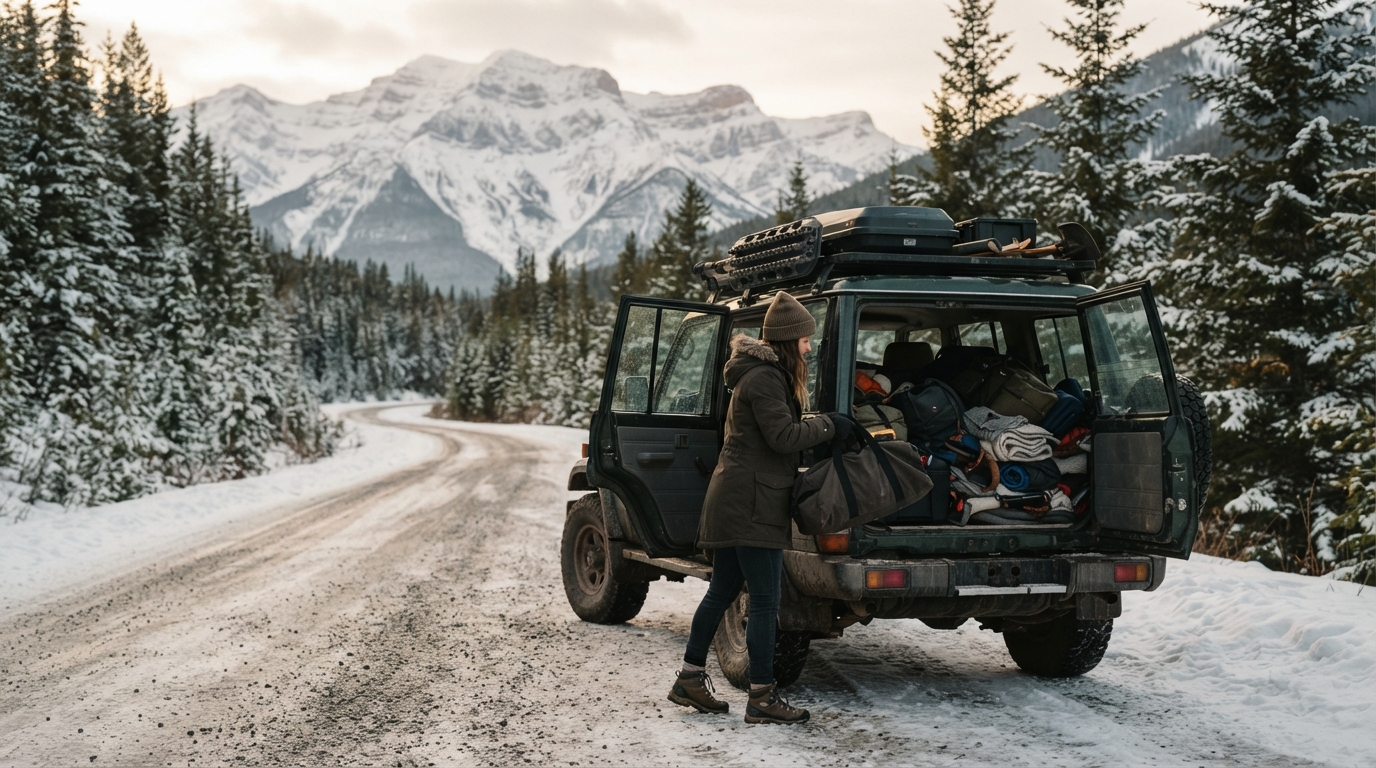
Recap:
-
A 4WD rental car provides better traction than two-wheel-drive vehicles on snow, gravel, and mountain roads common around Bozeman, MT.
-
Vehicle capability, tire type, and ground clearance matter more than drivetrain labels alone when driving canyon roads or airport approaches in winter.
-
Confirming tire specifications and vehicle readiness before pickup reduces risk on seasonal Montana routes.
Choosing a 4WD Rental Car means matching a vehicle’s drivetrain, tires, and ground clearance to the actual roads a traveler expects to drive, not simply picking the largest SUV available at the counter. For anyone flying into the region and planning to drive beyond paved city streets, that decision affects both safety and the overall trip experience.
Travelers heading to Bozeman, MT face a wide range of road conditions depending on the season and destination. Mountain passes, canyon routes, and gravel forest roads near Yellowstone all demand different vehicle capabilities than a straightforward airport-to-hotel drive.
Why Drivetrain Choice Matters for Montana Roads
Four-wheel drive and all-wheel drive are often marketed interchangeably, but they perform differently once pavement ends or ice forms.
-
AWD works continuously and adjusts power automatically, which suits light snow and wet pavement.
-
4WD allows manual engagement for low-range gearing, which helps on steep grades, deep snow, and loose gravel.
-
Ground clearance, not drivetrain alone, determines how a vehicle handles ruts, washboard roads, or spring mud near trailheads.
Travel researchers covering the region note that for winter visits roughly between November and April, upgrading to all-wheel drive or four-wheel drive is advisable, while all-season tires are generally insufficient once snow accumulates. Guidance for the area also points out that front-wheel-drive vehicles can struggle significantly even when AWD or 4WD vehicles handle the same conditions with more control.
Matching the Vehicle to the Season and Route
Vehicle selection should follow the specific roads planned for a trip rather than a general assumption that any SUV will suffice.
- Winter mountain routes (Big Sky, Bridger Bowl, canyon roads) call for 4WD with winter-rated tires, not all-season rubber.
- Backcountry or gravel access roads toward trailheads or Yellowstone benefit from higher ground clearance and low-range gearing.
- Spring and shoulder-season travel can still bring sudden snow, mud, or icy shade spots on bridges and canyon walls.
- Summer touring on paved highways may only require AWD, though gravel detours or weather shifts can change that quickly.
Before accepting a vehicle, it is worth asking directly what tires are mounted rather than accepting vague assurances of being “winter ready.” The Montana Department of Transportation’s winter driving guidance recommends checking tire condition, maintaining extra following distance, and preparing an emergency travel kit before any winter trip.
Tire Type and Vehicle Readiness Checklist
Tires influence traction as much as the drivetrain itself, and the two should be evaluated together rather than separately.
|
Tire Type |
Best Use |
Limitation |
|
All-season |
Dry or lightly wet paved roads |
Loses grip below freezing and on packed snow |
|
Winter/snow-rated |
Snow, ice, cold temperatures |
Wears faster on dry summer pavement |
|
All-terrain |
Gravel, light off-road, mixed conditions |
Less refined on highway speeds |
A short pre-departure checklist can help confirm a vehicle is actually suited to the planned route:
-
Confirm tire type and tread depth before leaving the pickup location.
-
Check that headlights, wipers, and defrosters function properly.
-
Verify ground clearance matches planned gravel or trailhead access.
-
Pack a scraper, flashlight, and basic winter kit for mountain routes.
Planning Pickup and Drop-Off Around Airport Logistics
Most visitors to the area collect a rental vehicle near Bozeman Yellowstone International Airport before heading toward Big Sky, Yellowstone, or canyon routes. Fueling up before entering Gallatin Canyon or committing to a park approach is a practical habit, since fuel stops become less convenient once past the main town corridor. Downloading offline maps in advance is also reasonable given limited cell coverage in canyon sections and parts of nearby parks.
Frequently Asked Questions
Is 4WD necessary for driving in Bozeman, MT year-round? Not year-round, but it becomes important for winter travel, mountain passes, and any gravel or backcountry routes regardless of season.
What is the difference between AWD and 4WD for rental vehicles? AWD engages automatically and suits light snow or wet roads, while 4WD offers manual low-range gearing better suited to steep grades, deep snow, and rough terrain.
Do rental vehicles in the area come with winter tires automatically? Not always; confirming tire type directly with the provider before pickup is the most reliable way to know what is actually mounted on the vehicle.
Should tire chains be carried even with 4WD? Yes, since some mountain passes legally require chains in winter regardless of drivetrain, according to regional travel guidance.
Business Information and Next Steps
Elite SUVs – Luxury Car Rentals serves customers across Bozeman, MT and nearby destinations.
Additional vehicle and booking information is published for Visit Website, covering current fleet details for travelers planning routes around the region.