
Short version:
-
CNC machining uses computer-guided cutting tools to produce tight-tolerance metal parts for aerospace, medical, and defense applications.
-
Precision shops in the Londonderry and Manchester, NH area pair CNC machining with in-house engineering, heat treating, and quality certifications to shorten lead times.
-
Choosing a provider with verified certifications (AS9100D, ISO 9001) and in-house secondary operations reduces outsourcing risk and delay.
CNC machining answers a simple manufacturing problem: how do you produce metal components that meet exact specifications, over and over, without relying on manual labor for every cut. A computer numerical control (CNC) machine reads a digital design file and guides cutting tools through metal stock with a level of repeatability that manual machining cannot match.
For companies researching CNC Machining Services in Manchester, NH, the practical question is usually which local shop can hold tight tolerances while also managing the secondary steps, like heat treating or welding, that turn a rough part into a finished component. The MuShield Company is one such provider in the region, with a physical facility in Londonderry, NH, offering CNC machining alongside precision sheet metal fabrication and related manufacturing services.
What CNC Machining Involves
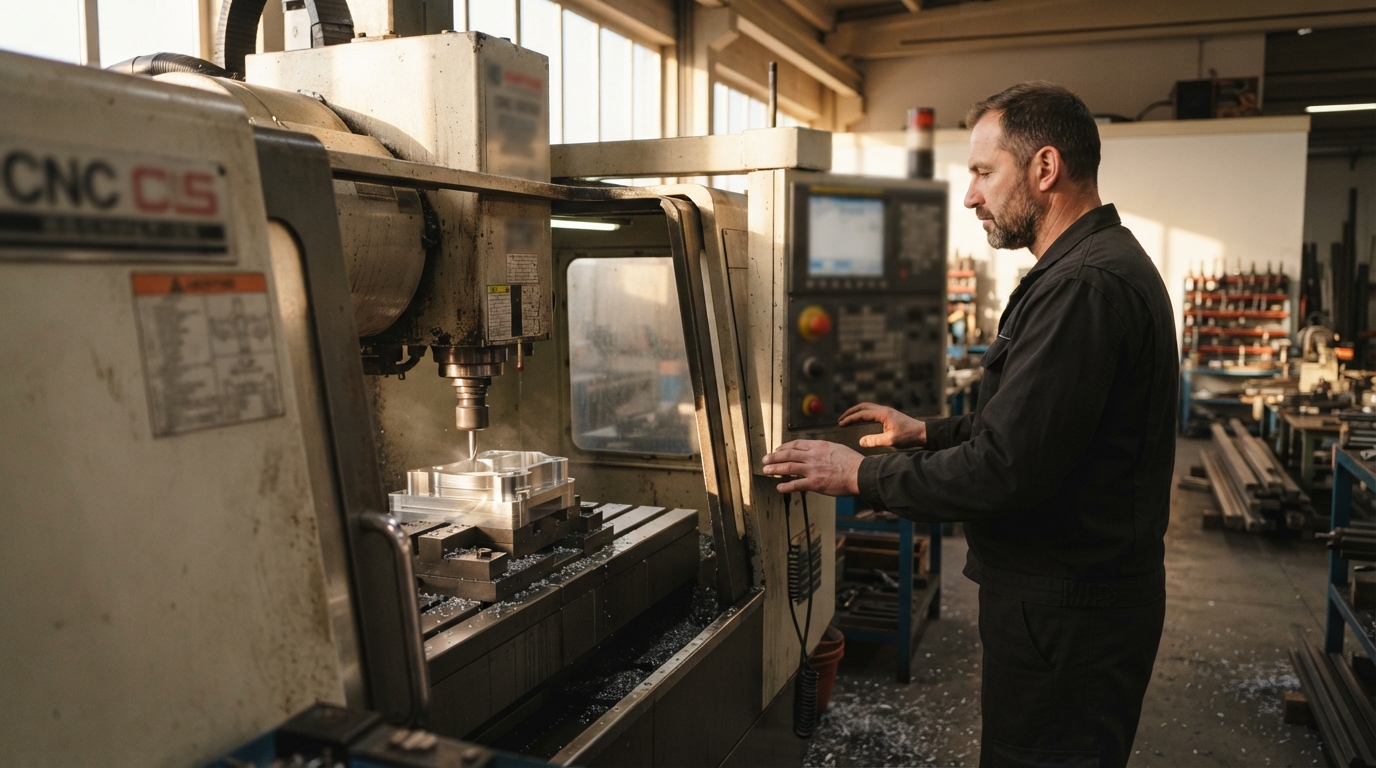
CNC machining removes material from a solid block or sheet using programmed tool paths rather than freehand operation. The process depends on a digital model, a machine capable of multi-axis movement, and an operator who verifies the output against the original specification.
Key elements of the process typically include:
-
CAD design translated into machine-readable code
-
Multi-axis cutting for complex geometries in a single setup
-
In-process measurement to catch deviations before a part is finished
-
Final inspection against the customer’s drawing tolerances
The National Institute of Standards and Technology notes that advanced manufacturing processes are designed to enhance the precision, efficiency, and capabilities of traditional manufacturing methods. That framing applies directly to CNC work, where tolerance control and repeatability are the entire value proposition.
Why Precision Matters for Regulated Industries
Parts destined for aerospace, defense, or medical devices rarely tolerate approximate fits. A bracket that is off by a few thousandths of an inch can affect how an assembly performs under vibration, heat, or pressure.
-
Aerospace components often require documentation proving every dimension was verified.
-
Medical device parts need consistent geometry across thousands of units.
-
Defense applications frequently carry ITAR registration requirements alongside dimensional accuracy.
Shops serving these sectors generally combine CNC machining with other in-house capabilities. Based on verified service listings, MuShield pairs machining with secondary operations such as heat treating, laser cutting, and welding, which keeps a project under one roof instead of splitting it across multiple subcontractors.
What to Look for in a Manchester, NH Area Machining Partner
Not every machine shop offers the same depth of service. Buyers comparing providers in the Manchester and Londonderry, NH corridor should weigh a few concrete factors before sending out a quote request.
|
Factor |
Why It Matters |
What to Verify |
|
Quality certifications |
Confirms documented process control |
AS9100D, ISO 9001 registration |
|
In-house secondary operations |
Reduces handoffs and delay |
Heat treating, welding, inspection on site |
|
Material range |
Determines part suitability |
Stainless steel, aluminum, specialty alloys |
|
Engineering support |
Helps catch design issues early |
In-house design or applications engineers |
Shops that hold current certifications are generally easier to vet, since the standards require documented quality systems rather than informal claims. Facilities registered under ITAR also matter for defense-related work, since that registration governs how technical data is controlled.
A Practical Takeaway for Buyers
Sourcing CNC machining locally in New Hampshire often comes down to reducing the number of vendors involved in a single part’s journey from raw stock to finished component. A shop that machines, heat treats, and inspects under one roof can usually compress lead time compared to a broker that outsources each step.
Buyers evaluating options in the Manchester, NH area should ask directly about certification status, in-house secondary capabilities, and the materials a shop regularly works with before submitting a drawing for quote. Those three data points filter out vendors who cannot support regulated industry requirements.
Frequently Asked Questions
What industries typically require CNC machined parts in New Hampshire? Aerospace, medical device, defense, and research sectors commonly specify CNC-machined components because of the tight tolerances and documentation these industries require.
Does CNC machining replace sheet metal fabrication? No. The two processes often work together, with CNC machining handling precision cuts on solid stock while sheet metal fabrication shapes flat material into formed parts.
Why do certifications like AS9100D matter when choosing a machining provider? These certifications confirm a documented quality management system is in place, which is often a prerequisite for aerospace and defense contracts.
Is Londonderry, NH considered part of the greater Manchester manufacturing area? Londonderry sits adjacent to Manchester, NH, and manufacturers based there commonly serve the broader Manchester metro market for sourcing and logistics.
Precision machining decisions rarely come down to price alone. Verifying certifications, in-house capabilities, and material experience gives buyers a clearer picture of whether a shop can actually deliver on a regulated part’s full specification, not just its rough geometry.