
Fence post locations influence where patios, walkways, pavers, gravel borders, and artificial turf can be installed. In Peoria, AZ, identifying every post before creating a hardscape plan can prevent awkward cuts, restricted gate movement, narrow pathways, and poorly aligned edges.
Fence lines may look like simple property boundaries, but their posts occupy physical space and often extend into the ground through concrete footings. A thoughtful layout accounts for both the visible post and its supporting structure before excavation or installation begins.
Why Should Fence Posts Be Considered Early?
A hardscape plan determines how different surfaces connect and how people move through the property. Fence posts can affect those decisions when they sit near patios, side-yard passages, gates, or proposed turf borders.
Planning around posts after materials have already been selected can lead to small filler pieces, uneven gaps, or last-minute layout changes. Identifying them during the initial site assessment gives the installer an opportunity to adjust patterns, borders, and dimensions before materials are cut.
Early planning is particularly important when posts are positioned at irregular intervals. A boundary may appear straight, while individual posts project into the usable area at slightly different depths.
How Do Fence Posts Affect Paver Patterns?
Paver layouts rely on consistent alignment. When a patio or walkway reaches a fence line, each post can interrupt the edge and require additional cuts.
Small or unusually shaped paver pieces may look disconnected from the main pattern. They can also be harder to position securely than full or evenly cut units. Adjusting the starting point or border width may help the pattern meet the fence more cleanly.
The selected paver size also matters. Large-format pavers may require wider cuts around posts, while smaller units may provide more flexibility. Pattern direction, joint spacing, border placement, and the distance between the planned surface and fence should be evaluated together.
Good hardscape planning does not necessarily hide every interruption. Instead, it incorporates posts into a deliberate edge treatment that appears consistent across the completed area.
What Is Beneath a Fence Post?
Many fence posts are supported by concrete below ground. The footing may extend farther outward than the visible post, which can affect excavation and base preparation.
Installers should avoid assuming that the underground support matches the exact width of the post. Digging too close without understanding what is beneath the surface could expose or interfere with the footing.
When a proposed patio or walkway approaches a fence, the available excavation depth and distance from the support should be reviewed. The compacted base must remain stable, but it should not disturb the fence structure.
If a post or footing needs to be moved, that work should be evaluated and completed by an appropriate provider before the hardscape project begins.
How Can Gate Posts Influence Walking Routes?
Gate posts define one of the most frequently used transitions in a fenced yard. Their position affects the width of the opening, the direction of travel, and the amount of space available for pavers or other surfaces.
A path should align naturally with the usable gate opening rather than simply following the center of the surrounding wall. Hinges, latches, and the direction of the gate swing can reduce practical clearance.
The finished elevation also requires attention. Pavers or other materials should not prevent the gate from opening fully. At the same time, an excessive change in height can create an uncomfortable step at the entrance.
For side yards, installers should consider how trash bins, bicycles, carts, and other frequently moved items will pass through the gate. A route that works comfortably for foot traffic may feel too narrow when larger items are involved.
How Do Posts Affect Drainage Near a Fence?
Hard surfaces influence how water moves across a property. Grading should direct runoff toward an appropriate drainage area without trapping water beside fence posts or neighboring walls.
Concrete footings can interrupt the movement of water below the surface. When several footings sit along a narrow side yard, the drainage plan may need to account for these underground obstacles.
The finished hardscape should also avoid directing concentrated runoff onto a neighboring property. Existing slopes, downspouts, roof runoff, gates, walls, and nearby drains should be reviewed before elevations are established.
In Peoria, long dry periods can be followed by concentrated rainfall. Planning drainage early helps the installed area respond more effectively when water moves across the property.
Can Artificial Turf Meet a Fence Line?
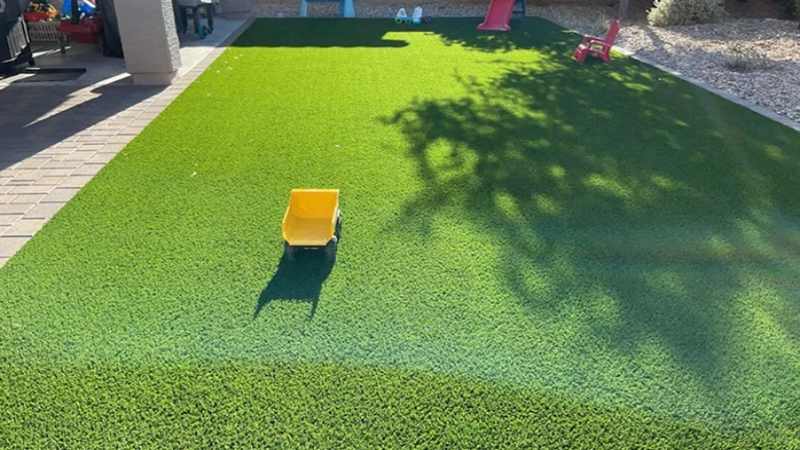
Artificial turf installation can extend toward a fence, but the perimeter needs a secure and clearly defined edge. Fence posts can interrupt that edge and require the turf to be carefully measured and cut.
Leaving wide, irregular gaps around posts may expose the prepared base or allow gravel and debris to collect. Cutting too tightly can make positioning difficult and may produce an uneven appearance.
Installers should also evaluate whether the fence line is straight. Minor changes in alignment can become more noticeable when artificial turf creates a continuous green surface beside it. A border may help accommodate variations while providing separation between the turf and fence.
When turf, pavers, and gravel meet near the same post, their elevations and edges should be coordinated as one detail.
Should Hardscape Be Installed Before a New Fence?
Project order depends on the scope of work, but fence placement should generally be confirmed before permanent hardscape features are installed beside it. This allows post locations and underground supports to be incorporated into the plan.
Installing the fence first can provide clear boundaries. However, the fence contractor should understand the proposed finished elevations and nearby material layout. If post concrete spreads into the future paver area, it may limit base preparation.
When the existing fence will remain, installers should document its condition and exact position. TURFD provides information about Hardscaping and how permanent features can be planned as parts of a connected outdoor layout.
What Should Be Checked Before Installation?
Before approving a hardscape layout, property owners and installers should review:
- The location and width of every fence post
- Gate openings, hinges, latches, and swing direction
- Visible or known concrete footings
- Proposed paver patterns and border widths
- Walking clearance along narrow routes
- Turf and gravel connections near the fence
- Existing slopes and drainage paths
- Property boundaries and community requirements
These details can reveal conflicts before excavation, cutting, or material delivery begins.
Plan Around the Fence From the Beginning
Fence posts may occupy only a small part of a yard, but they can affect pattern alignment, pathways, gate clearance, drainage, and connections between materials. Treating the fence as part of the initial hardscape plan supports cleaner edges and more practical movement through the property.
Before beginning a project in Peoria, document fence and gate locations and discuss how each one relates to the proposed surfaces. Contact a qualified installer to assess the site and develop a layout that accounts for visible features and below-ground conditions.