
The gist:
• Material choice is the single most consequential decision in any gutter project, directly affecting lifespan, maintenance frequency, and how well the system handles Guilford’s coastal climate.
• Aluminum and copper are the two strongest options for shoreline Connecticut properties; vinyl underperforms in cold, wet, salt-air conditions.
• A licensed contractor can match the material to your roof type, home style, and drainage requirements.
Selecting the right gutter material is the foundation of a durable, low-maintenance drainage system. For Guilford homeowners, that decision is shaped by a climate that combines heavy year-round precipitation, freezing winters, and proximity to Long Island Sound.
Proper gutter installation in Guilford CT demands materials that can handle all three of those conditions simultaneously. Connecticut’s climate is characterized by cold, snowy winters and warm, humid summers, with the jet stream giving the state highly variable weather patterns and generally abundant precipitation throughout the year. According to the NOAA State Climate Summaries, spring precipitation is projected to increase in Connecticut by mid-century, making a correctly specified gutter system more important than ever.
How Guilford’s Coastal Setting Affects Material Selection
Guilford sits along the Connecticut shoreline, and that geography creates conditions that shorten the life of poorly chosen gutter materials. Guilford’s unique mix of historic New England charm and shoreline living makes gutter protection especially important: shoreline properties near Mulberry Point, Sachems Head, and Leetes Island face coastal storms and salt air, which accelerate gutter wear.
Salt air is a persistent threat to metal systems. Salt air poses a significant challenge for coastal homes: tiny particles of sodium chloride from ocean waves and wind travel inland, often several miles depending on wind patterns, and when combined with high coastal humidity and moisture, trigger accelerated chemical reactions that degrade building materials far faster than in inland environments.
Salt spray along the Connecticut Coastal Slope accelerates galvanic corrosion on non-aluminum gutter components, and saline moisture degrades steel fasteners and damages protective coatings on standard metal systems. For homeowners within a few miles of the Sound, this narrows the practical material choices considerably.
Connecticut also sets minimum standards by code. State code requires gutters to be made from weather-resistant materials like aluminum, galvanized steel, or copper, with plastic allowed in some cases only if it meets durability standards. Gutters in Connecticut must also be able to hold extra weight during snow and ice buildup, as ice dams are a common problem, and a system that cannot handle the weight risks pulling away from the roof or causing leaks.
Comparing the Main Gutter Materials
The four materials most commonly considered for residential installations each carry distinct trade-offs.
|
Material |
Typical Lifespan |
Coastal Suitability |
Relative Cost |
|
Aluminum (seamless) |
20-30 years |
Excellent |
Moderate |
|
Copper |
50+ years |
Excellent |
High |
|
Galvanized Steel |
15-20 years |
Fair (coating dependent) |
Moderate |
|
Vinyl |
10-15 years |
Poor |
Low |
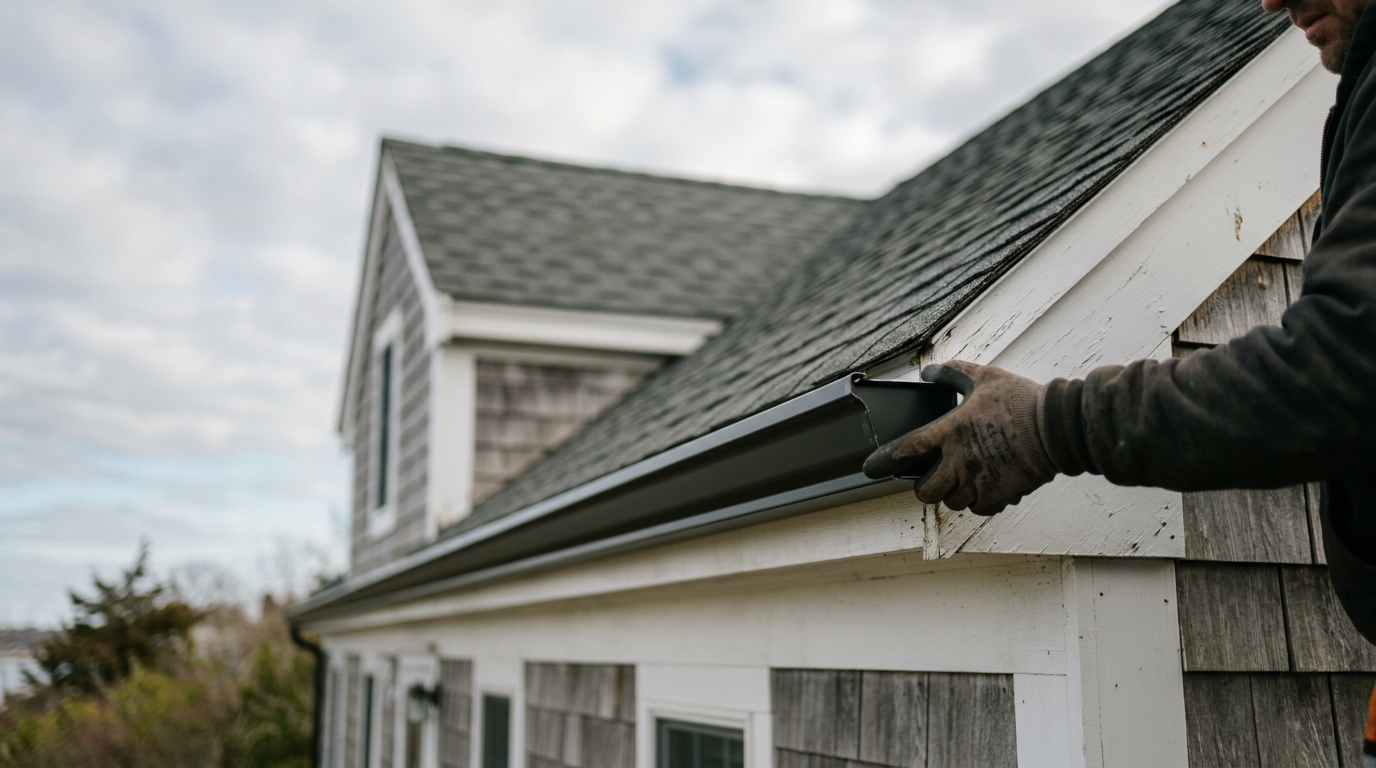
Aluminum is the most effective and widely used gutter material for modern homes. Aluminum is a great choice for those living in areas with abundant rain, humidity, or seasonal changes, because it is resistant to rust and corrosion. Seamless gutters are typically made from aluminum, steel, or copper and are cut onsite for a precise fit; while more expensive than seamed vinyl systems, they offer better long-term performance with less maintenance.
Copper is the premium option for Guilford’s historic homes near the Green. Copper is durable, never rusts, and never needs painting; it is expensive, but adds value to the home and requires less maintenance than aluminum or other materials. Copper’s patina adds a distinctive character and a protective layer to gutters on upscale homes, custom builds, and historical buildings.
Steel carries risk in a coastal environment. Steel gutters can stand up to ladders and fallen branches better than aluminum, but even thick galvanized steel eventually rusts and needs to be painted. Standard steel gutters often rely on thin zinc or paint coatings for protection, and salt air is efficient at penetrating these layers; a single scratch from a ladder or wind-blown branch becomes an entry point for localized corrosion.
Vinyl is the least suitable choice for Guilford. Homeowners in a dry climate can expect 20 years from vinyl gutters, but residents in a wet climate can expect around ten years, and vinyl will not hold up in climates with lots of rain, wind, and snow.
Seamless vs. Sectional: Why the Format Matters
Beyond material, the construction format affects performance. Sectional gutters have joints at regular intervals; those joints are where leaks most often originate. Seamless gutters have fewer joints, minimizing the risks of leaks, and are available in many colors to coordinate with the home. Custom-cut and fit seamless gutters are incredibly strong and far more resistant to damage from ladders and other objects.
For properties near the shoreline, the seamless format also reduces the number of points where salt-laden moisture can work its way into the gutter-to-fascia connection, slowing the corrosion cycle that affects sectional systems first.
Frequently Asked Questions
Is aluminum or copper better for a Guilford shoreline home? Both are corrosion-resistant and suitable for coastal conditions. Aluminum is the practical choice for most budgets; copper is preferred for historic properties or homeowners seeking a long-term architectural feature with minimal upkeep.
Can I install vinyl gutters on a Connecticut home? Vinyl is permitted under state code if it meets durability standards, but it is poorly suited to Connecticut’s freeze-thaw cycles, heavy precipitation, and salt-air exposure. Most contractors advise against it for coastal properties.
How often should gutters be inspected in Guilford? Given the combination of seasonal storms, leaf fall from dense deciduous canopies, and coastal salt exposure, a minimum of two inspections per year — spring and fall — is advisable, with additional checks after major storms.
Does Connecticut require a licensed contractor for gutter installation? Hiring a licensed contractor is not just about skill — it ensures the gutter job follows local rules, avoids fines, and holds up over time. Connecticut requires home improvement contractors to register with the Department of Consumer Protection.
Work With a Local Expert
Material selection is only as effective as the installation behind it. The professional team at Town & Country Seamless Gutters has over 22 years of combined experience in the exterior home construction industry and specializes in seamless gutters, gutter installations, protection systems, and vinyl soffit and fascia repair. From historic homes near the Guilford Green to shoreline properties along Long Island Sound, the team specializes in custom-fit gutter systems that protect homes from heavy coastal rains and seasonal storms. Request a free estimate to determine which material and profile best fits your home’s architecture, exposure, and long-term maintenance goals.